
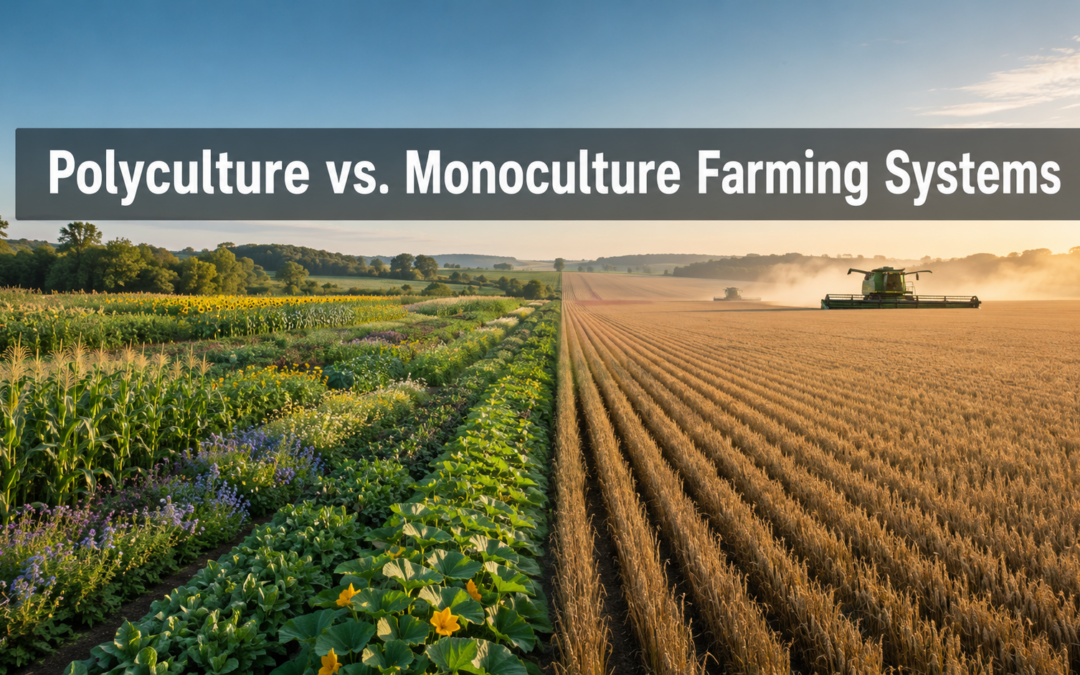
Polyculture vs. Monoculture Farming Systems
When farmers plan a field, they must decide not only what to grow but also how many crops to grow.
This choice affects machinery, labor, soil health, pest pressure, income, and polyculture vs. monoculture farming.
Monoculture means growing one crop species in a field during a particular season. Polyculture means growing two or more crop species together within the same production area. Intercropping, companion planting, strip cropping, and traditional systems such as corn, beans, and squash are all forms of polyculture.
However, one distinction matters: a farmer can grow a monoculture during one season and then rotate to another crop the following year. Continuous monoculture—growing the same crop repeatedly—is more likely to create long-term pest, disease, and fertility problems.
A quick comparison
| Factor | Monoculture | Polyculture |
|---|---|---|
| Field design | One crop species | Two or more crop species |
| Machinery | Easier to standardize | May require specialized planning |
| Pest risk | Outbreaks may spread quickly | Diversity can interrupt some pests |
| Soil biology | Less plant diversity | More varied roots and residues |
| Resource use | Crops need similar resources | Crops may use resources differently |
| Harvesting | Usually simpler | May involve several harvest schedules |
| Market risk | Income depends heavily on one crop | Income can be spread across crops |
| Resilience | Depends on inputs and precise management | Diversity can buffer some losses |
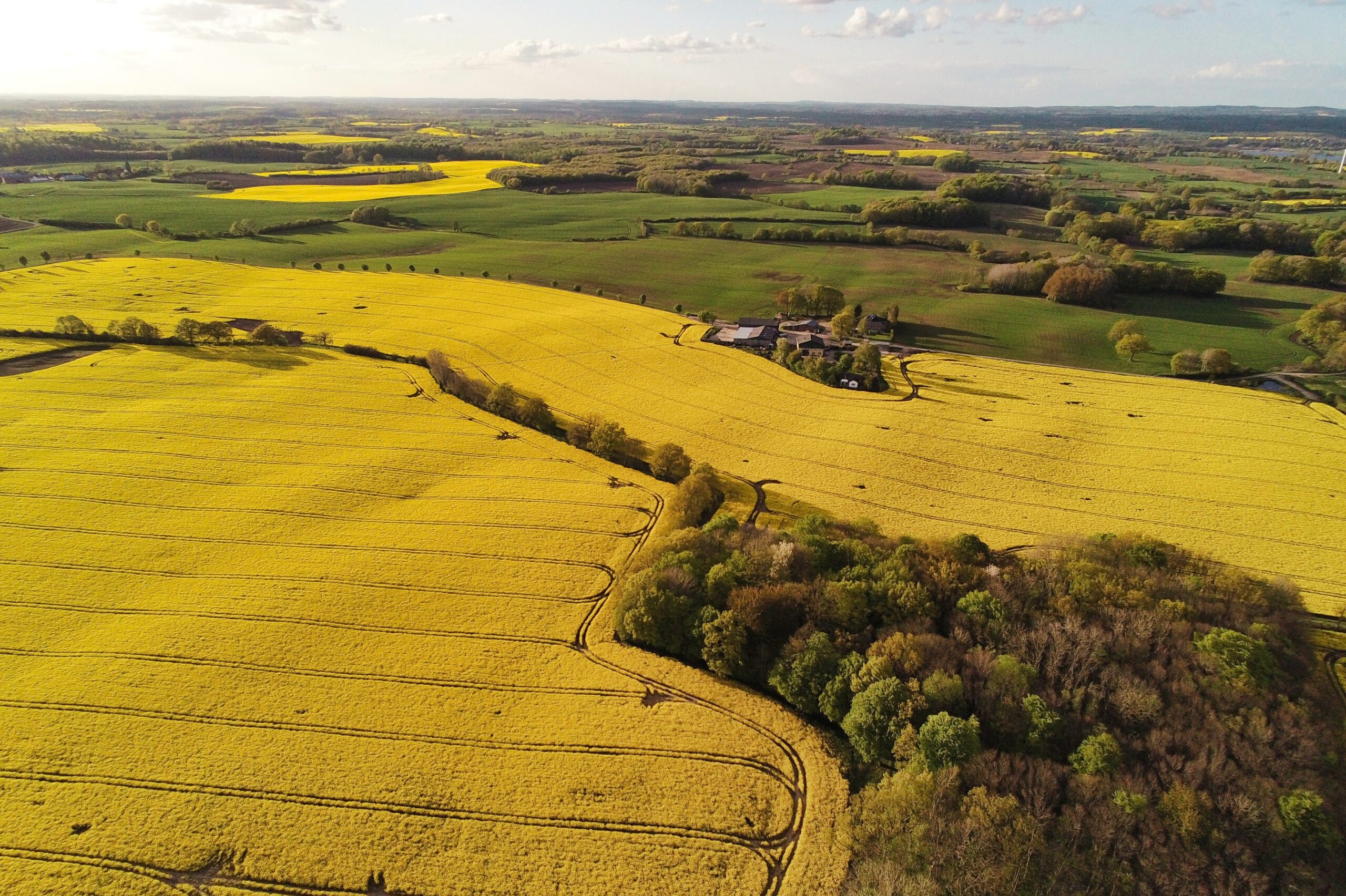
Monoculture supports efficiency and scale
Monoculture makes production easier to standardize. Farmers can plant one seed variety, follow one fertility program, use the same machinery across the field, and harvest the crop at approximately the same time.
Consequently, monoculture works particularly well for large commodity operations. Corn, wheat, soybeans, cotton, and rice are commonly grown this way because the crops can be planted and harvested efficiently across thousands of acres.
Farmers can also optimize every part of the operation for one crop. Under favorable conditions, this can produce high yields and reduce the cost of labor per acre.
However, this efficiency comes with concentration risk. If that crop suffers from drought, disease, low market prices, or an unexpected pest outbreak, a large share of the farm’s income may be affected at once.
Polyculture creates diversity within the field
Polyculture brings different plant species together so they can use the same field in complementary ways.
For example, a tall crop may capture sunlight above a shorter crop. Meanwhile, a deep-rooted plant can reach moisture and nutrients below the roots of a shallow-rooted species. Legumes may also contribute biologically fixed nitrogen to the farming system.
The USDA Natural Resources Conservation Service describes intercropping as growing two or more crops near one another during part or all of their life cycles. The agency recognizes that these systems can support plant interactions, biodiversity, soil health, and pest management. (USDA intercropping guide)
Therefore, the value of polyculture is not simply that more crops are present. The real advantage comes from choosing species that perform different functions without competing too heavily with one another.
Crop diversity can strengthen soil health
Every plant interacts with soil differently. Some plants produce deep taproots, while others create dense networks of fine roots near the surface. Crops also leave behind different amounts and types of residue.
As a result, a well-designed polyculture can support a broader community of soil organisms and keep living roots in more parts of the soil profile. Greater root diversity can also improve nutrient cycling, soil structure, and organic-matter formation.
The USDA’s soil-health guidance recommends maximizing biodiversity because diversity above the ground supports biological diversity below it. The agency also notes that diverse rotations and cover crops can improve soil function while helping reduce pest and disease problems associated with monocultures. (USDA NRCS soil-health guidance)
Still, crop diversity alone does not guarantee healthy soil. Tillage intensity, erosion, compaction, water management, crop residue, and fertilizer practices remain important in both systems.
Pest and disease risks are different
A large field containing one crop can provide a continuous supply of food and habitat for pests that specialize in that plant. If a pathogen or insect becomes established, it may move quickly between neighboring plants.
Polyculture can interrupt that pathway. Different plant heights, scents, structures, and levels of susceptibility can make it harder for certain pests to locate and spread between host plants. Diverse vegetation may also provide food or habitat for beneficial insects.
The traditional Indigenous “Three Sisters” system illustrates this principle by growing corn, beans, and squash together. The USDA National Agricultural Library notes that inter-planted crops may be less attractive to some pests than extensive plantings of a single crop. (USDA: The Three Sisters)
Nevertheless, polyculture is not automatically pest-free. Some crop combinations may share diseases, attract unwanted insects, or make mechanical weed control more difficult. Farmers must select compatible species and continue monitoring the field.
Polyculture can use land and nutrients efficiently
In monoculture, plants generally compete for resources at similar depths and stages of development. In polyculture, carefully selected crops may divide those resources more effectively.
Researchers often measure this advantage with a land equivalent ratio. This calculation compares the amount of land required to produce the same combined yields under monoculture and intercropping.
A research synthesis on cereal-legume intercropping found that intercrops frequently produced more combined output per unit of land and used phosphorus fertilizer more efficiently than the crops grown separately. However, results varied according to crop selection, field conditions, and management. (Plant and Soil research)
In other words, simply mixing seeds is not enough. Farmers need to consider plant spacing, root behavior, growth rate, water availability, and nutrient demand.
Which system produces better yields?
The answer depends on how yield is measured.
If the goal is to maximize the harvest of one particular crop, a well-managed monoculture may deliver the highest yield of that crop. Every decision can be optimized for one plant, from seed selection to harvest timing.
In a polyculture, the yield of an individual crop may sometimes be lower because it shares space with other species. However, the combined production from the entire field can be higher or more stable.
A meta-analysis of arable farming systems found that cereal-legume intercropping improved yield stability compared with growing the crops separately. (European Journal of Agronomy study)
Therefore, farmers should compare total land productivity, crop quality, market value, and stability—not just the yield of one crop.
Diversity can reduce financial risk
Monoculture concentrates both production and market risk. When a farmer depends on one crop, a price decline or production failure can affect most of the season’s revenue.
Polyculture can spread that risk across several products. If one crop performs poorly, another may still provide a harvest or source of income.
Recent research examining broader agricultural diversification found long-term improvements in profitability, biodiversity, soil quality, pollination, and carbon storage, without a significant overall reduction in crop yield. However, the authors also emphasized that results depend on local conditions and the diversification practices used. (Nature Communications meta-analysis)
At the same time, diversified production may require additional labor, storage, processing, and marketing channels. Growing several crops only makes economic sense when the farmer can manage and sell them effectively.
Polyculture requires more planning
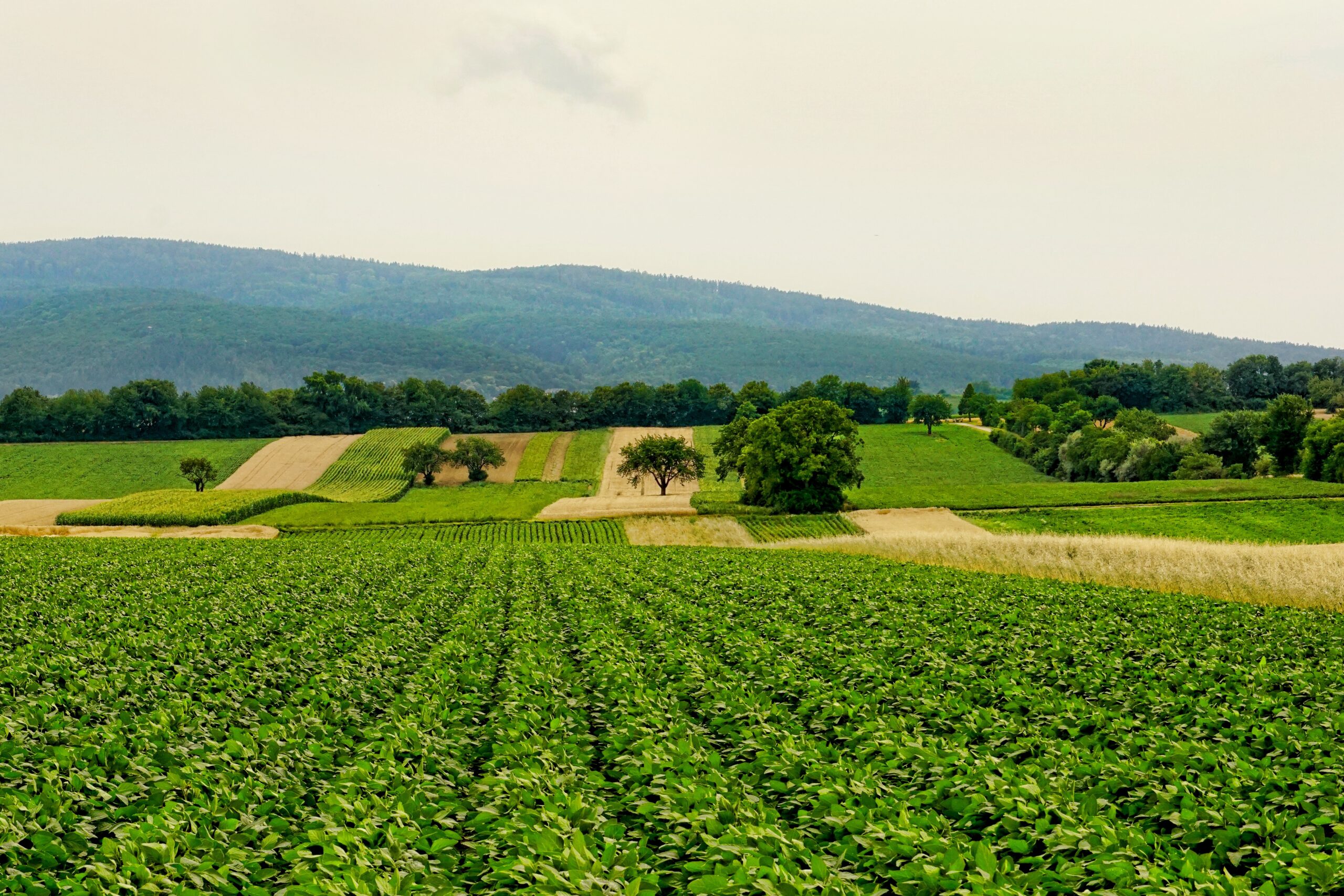
Management complexity is one of polyculture’s largest challenges. Different crops may need different:
- Planting dates
- Row spacing
- Fertility programs
- Irrigation schedules
- Pest-control methods
- Harvesting equipment
- Storage conditions
- Buyers or distribution channels
Farmers must also consider whether crops will mature together or require several field operations. Herbicide choices may become limited when broadleaf crops and grasses grow together.
For these reasons, farmers often begin with a small trial instead of converting an entire operation immediately.
Farmers can combine both approaches
The choice does not have to be completely monoculture or completely polyculture. Many farms use a combination of practices, including:
- Rotating monoculture crops between seasons
- Planting multi-species cover crops
- Intercropping cereals and legumes
- Growing companion plants between vegetable rows
- Using strip intercropping that accommodates machinery
- Adding trees through agroforestry
- Maintaining flowering field borders for beneficial insects
This blended approach allows farmers to preserve some of the efficiency of monoculture while introducing more biological and economic diversity.
How should a farmer choose?
Before selecting a system, consider these questions:
- What crops are adapted to the local soil and climate?
- Is specialized planting or harvesting equipment available?
- Can the crops be sold through reliable markets?
- Which pests and diseases create the greatest local risks?
- Is the primary goal maximum single-crop yield, total farm income, soil improvement, or long-term resilience?
- Can a small comparison plot be tested before expanding?
The best system is one that matches the farm’s land, labor, equipment, markets, and long-term goals.
Conclusion
Monoculture offers uniformity, efficiency, and easier large-scale mechanization. Polyculture offers biological diversity, complementary resource use, and greater protection against certain environmental and economic risks.
Neither approach is automatically successful. A poorly planned polyculture may create excessive competition and complicated harvests. Likewise, a poorly managed monoculture may become increasingly dependent on fertilizers, pesticides, and other external inputs.
For many farmers, the most practical path is to maintain operational efficiency while gradually adding diversity through rotations, cover crops, intercropping, or agroforestry.
Ready to explore more ways to build productive, profitable, and environmentally responsible farming systems? Visit the EAT Community and join people working to “make a little money making the planet better.”
Related articles and resources
- Understanding the Role of Sustainability in Marketing
- Polyculture Farming: Reviving Practices for Food Security
- How Soil Health Drives Sustainable Agricultural Productivity
- Regenerative Agriculture: Boosting Soil Health and Carbon Sequestration
- USDA NRCS Soil Health
- USDA Guide to Intercropping for Soil Health
- FAO Crop Diversification Systems