
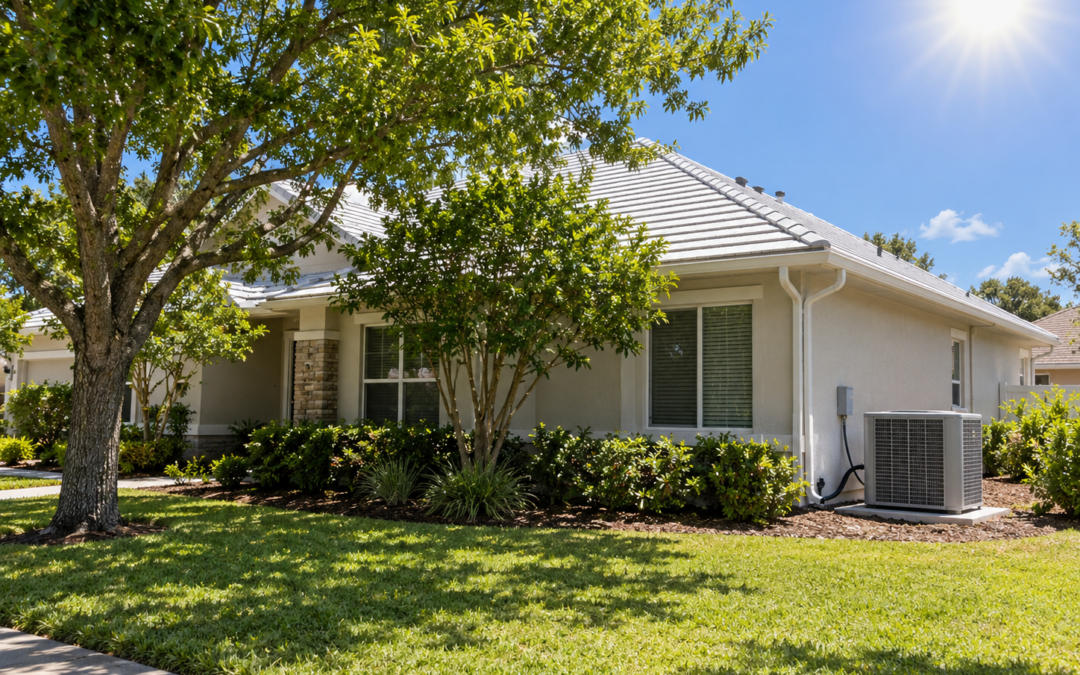
Rising temperatures are changing how households use energy to stay comfortable. As heat waves become more frequent or intense in many regions, air conditioners, fans, and other cooling systems have to operate for longer periods, increasing electricity consumption and household energy costs. The International Energy Agency reports that energy use for space cooling has grown faster than any other end use in buildings since 2000, increasing by more than 4% per year. IEA Energy Efficiency 2025
The pressure is not limited to individual homes. According to the IEA, global electricity demand for space cooling has risen by about 50% since 2015, reaching roughly 2,900 terawatt-hours. IEA cooling analysis The challenge for households is therefore becoming clear: keeping homes safe and comfortable during hotter weather without allowing cooling costs to rise unnecessarily.
Make the Building Work Before the Air Conditioner
A home’s cooling bill is influenced by how easily outside heat enters the building. Roofs, walls, windows, air leaks, and poor insulation can all allow heat to move indoors, forcing air conditioners to work harder. The U.S. Department of Energy estimates that $200 to $400 of roughly $2,000 in annual household energy spending can be wasted through drafts, air leaks, and outdated heating or cooling systems. U.S. Department of Energy energy-efficiency guidance
Insulation and air sealing can reduce this unwanted heat gain. Adding insulation to attics and walls, sealing gaps around doors and windows, and improving ductwork can help keep cooled air inside and hot outdoor air outside. The Department of Energy notes that reducing drafts alone may lower total household energy use by roughly 5% to 30%, depending on the condition of the home. That makes building-envelope improvements one of the most practical places to begin before investing in a larger cooling system.
Roofs are especially important because they receive intense solar radiation throughout the day. Reflective or “cool” roofs absorb less solar energy than conventional dark surfaces, which can reduce the amount of heat transferred indoors. Department of Energy research has found that cool roofing can reduce annual air-conditioning energy use by as much as 15% in some single-story buildings in warm climates. U.S. Department of Energy cool-roof guidance
Cooling Equipment Matters More as Summers Get Hotter
Even a well-designed home may still need mechanical cooling during periods of extreme heat. As cooling seasons become longer, the efficiency and condition of air-conditioning equipment become increasingly important. The Department of Energy estimates that households can reduce air-conditioning energy use by 20% to 50% by switching to high-efficiency equipment and combining that upgrade with other measures that reduce cooling demand. DOE Home Cooling guide
Maintenance also matters. Dirty filters restrict airflow and force systems to work harder, while poorly sealed ducts can allow conditioned air to escape before it reaches living spaces. DOE guidance indicates that cleaning or replacing filters can lower an air conditioner’s energy consumption by roughly 5% to 15%. Regular inspection of coils, ducts, thermostats, outdoor units, and airflow can therefore improve both comfort and operating efficiency.
Households replacing older equipment should compare energy performance rather than purchase based only on initial price. ENERGY STAR notes that an air conditioner more than 10 years old may be worth evaluating for replacement, and properly installed high-efficiency equipment can save up to 20% on heating and cooling costs compared with less efficient systems. ENERGY STAR replacement guidance The best choice still depends on climate, home size, insulation, system design, and local electricity prices.
Use Shade and Natural Cooling Where Conditions Allow
Mechanical cooling is only one way to reduce indoor temperature. Shade can limit the amount of solar heat entering a home before the air conditioner needs to remove it. Trees and other vegetation cool buildings by blocking sunlight and through evapotranspiration, and the U.S. Environmental Protection Agency cites a review of 308 studies finding that urban forests were, on average, about 3°F (1.6°C) cooler than non-green urban areas. EPA benefits of trees and vegetation
Strategically planted trees can shade roofs, walls, and windows during the hottest parts of the day. Exterior shades, awnings, shutters, and energy-efficient window coverings can provide similar benefits where planting large trees is not practical. These approaches are most useful when they block direct sun without preventing desirable airflow or daylight.
Natural ventilation can also reduce cooling demand under the right conditions. The Department of Energy explains that nighttime ventilation, cross-breezes, and the “chimney effect” can remove stored heat from a home when outside air is cooler and sufficiently dry. DOE natural ventilation guidance This strategy is less useful during very hot, humid weather or when outdoor air quality is poor, so ventilation should complement rather than automatically replace mechanical cooling.
Manage Cooling as a Household Energy System
The most effective response to rising cooling costs is usually not a single upgrade but a combination of smaller improvements. A household can reduce cooling demand by improving insulation, limiting air leakage, shading windows, maintaining air-conditioning equipment, using efficient fans, and adjusting thermostat schedules. ENERGY STAR estimates that the average U.S. household spends more than $2,200 per year on energy, with nearly half going toward heating and cooling, which shows why even modest efficiency improvements can have meaningful financial value. ENERGY STAR savings calculator
A useful approach is to treat cooling as a system rather than simply an appliance. Before replacing equipment, households can examine insulation, roof condition, air leakage, shade, ductwork, thermostat settings, and maintenance. A home-energy assessment can help identify which improvements offer the greatest benefit for a particular building, climate, and budget.
Climate change is likely to make household cooling an increasingly important energy expense in many regions. Families cannot control outdoor temperatures, but they can reduce how much heat enters their homes and how much electricity is required to remove it. Better insulation, efficient equipment, reflective roofs, shade, careful ventilation, and regular maintenance can work together to keep homes more comfortable while limiting the financial impact of longer and hotter cooling seasons.
The Ecolonomics Action Team (EAT Community) connects people interested in climate solutions, energy efficiency, environmental innovation, and sustainable living. Visit EAT Community: https://www.eatcommunity.com/ to learn from environmental professionals and explore practical ideas for reducing costs while building more resilient homes and communities.
Sources & Further Reading
International Energy Agency — Energy Efficiency 2025
Explains how space cooling has become the fastest-growing building energy end use since 2000 and discusses rising cooling demand in hotter climates.
IEA Energy Efficiency 2025 IEA
International Energy Agency — The Future of Cooling
Provides broader context on global air-conditioning demand, electricity use, and the importance of improving cooling efficiency.
IEA — The Future of Cooling IEA
U.S. Department of Energy — Why Energy Efficiency Matters
Covers insulation, air sealing, drafts, thermostat settings, duct losses, and heating and cooling efficiency in homes.
DOE — Why Energy Efficiency Matters The Department of Energy’s Energy.gov
U.S. Department of Energy — Cool Roofs
Explains how reflective roofing can reduce roof temperatures and, in suitable warm climates, lower air-conditioning energy use.
DOE — Cool Roof Fact Sheet Energy Efficiency and Renewable Energy
ENERGY STAR — When Is It Time to Replace Heating and Cooling Equipment?
Provides guidance on older air conditioners and notes that correctly installed high-efficiency ENERGY STAR equipment can reduce heating and cooling costs.
ENERGY STAR — HVAC Replacement Guidance Energy Star
U.S. Environmental Protection Agency — Benefits of Trees and Vegetation
Explains how trees provide shade and evapotranspirative cooling, reduce heat-island temperatures, and lower building cooling demand.
EPA — Benefits of Trees and Vegetation US EPA
U.S. Department of Energy — Natural Ventilation and Cooling
Describes night flushing, cross-ventilation, the chimney effect, and conditions where natural ventilation can reduce mechanical cooling needs.
DOE — Natural Ventilation and Cooling